Warsaw, Poland, May 19, 2026
Cold Plates in AI-Ready Data Centers: The Unsung Heroes of Direct Liquid Cooling
Walk into any modern AI data hall and you’ll see a new kind of challenge taking shape. Racks that once consumed a modest 5-10 kW now hum at 70, 80, even 120 kW. Each is filled with GPUs and CPUs pushing silicon to its thermal limits. The fans are faster, the airflows hotter, and the margins for error smaller.
In this environment, traditional air cooling – no matter how well-engineered – is simply running out of headroom. Even conventional liquid-to-air systems are being pushed to their limits. This is why Direct Liquid Cooling (DLC) has moved from an exotic experiment to a mainstream necessity in AI-ready data centers. And at the center of every DLC loop lies a component that rarely gets the attention it deserves: the cold plate.
What are Cold Plates?
A cold plate is a precisely engineered thermal solution that interfaces directly with heat-generating components, such as CPUs or GPUs. Cold plates are typically made from highly conductive material like copper. The cold plate’s structure incorporates microchannels or fin arrays through which liquid coolant flows, absorbing and carrying away heat at the source. Each design is tailored to the component it cools, with customized geometry, mounting systems, and thermal-conductivity enhancements to ensure maximum efficiency.
Beyond being a mechanical interface, the cold plate is a critical enabler of DLC. It allows high-performance chips to operate within safe temperature ranges, sustaining performance and reliability under extreme power densities. In modern data centers, HPC clusters, and AI-intensive GPU workloads, cold plates are the difference between theoretical peak output and real-world sustained throughput – making them indispensable for next-generation thermal management.
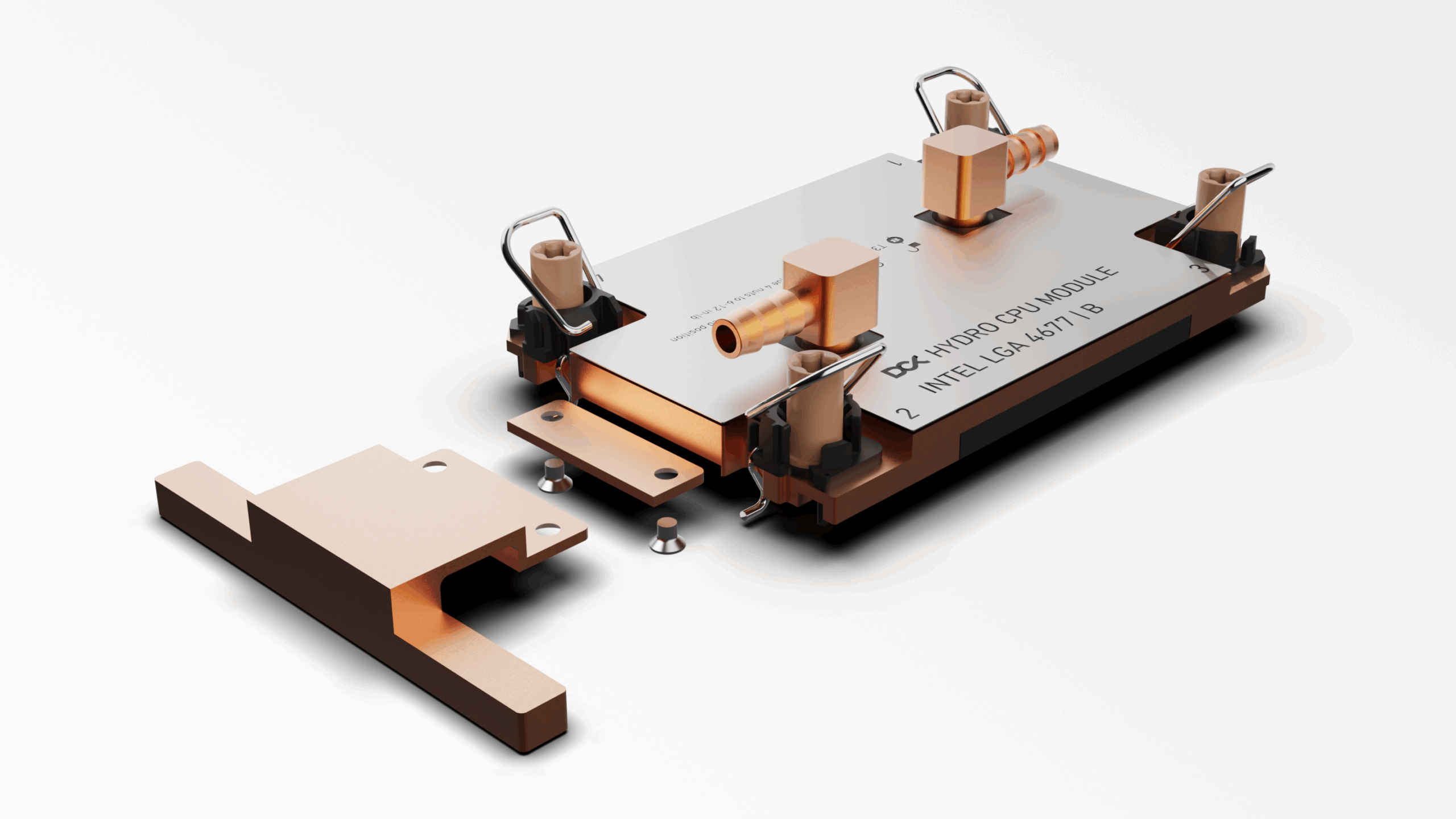
Figure 1. Cold plates
From Heat Source to Coolant – The Cold Plate’s Role
Think of the cold plate as the handshake between the processor and coolant. It is the first point of contact between the raw heat of a chip and the liquid loop tasked with carrying that heat away. Bolted directly onto the integrated heat sink of a CPU or GPU, it transfers hundreds or even thousands of watts from silicon into liquid in the space of a few square centimeters.
What makes this role unique is not the material or structure of the plate, but the efficiency of the heat-transfer pathway it creates. In a well-designed system, thermal energy flows almost directly from silicon into the coolant, bypassing multiple intermediate barriers that limit conventional cooling methods.
This streamlined transfer enables direct-to-chip cooling to remove over 90% of a server’s heat load without the need for energy-hungry fans or oversized CRAC units. In AI clusters, where GPUs often run at sustained loads close to their thermal limits, this efficiency determines whether workloads operate at peak performance or face thermal throttling.
CPU Cold Plates vs. GPU Cold Plates – Similar Goals, Different Challenges
While the basic principle is the same, CPUs and GPUs present very different cooling landscapes.
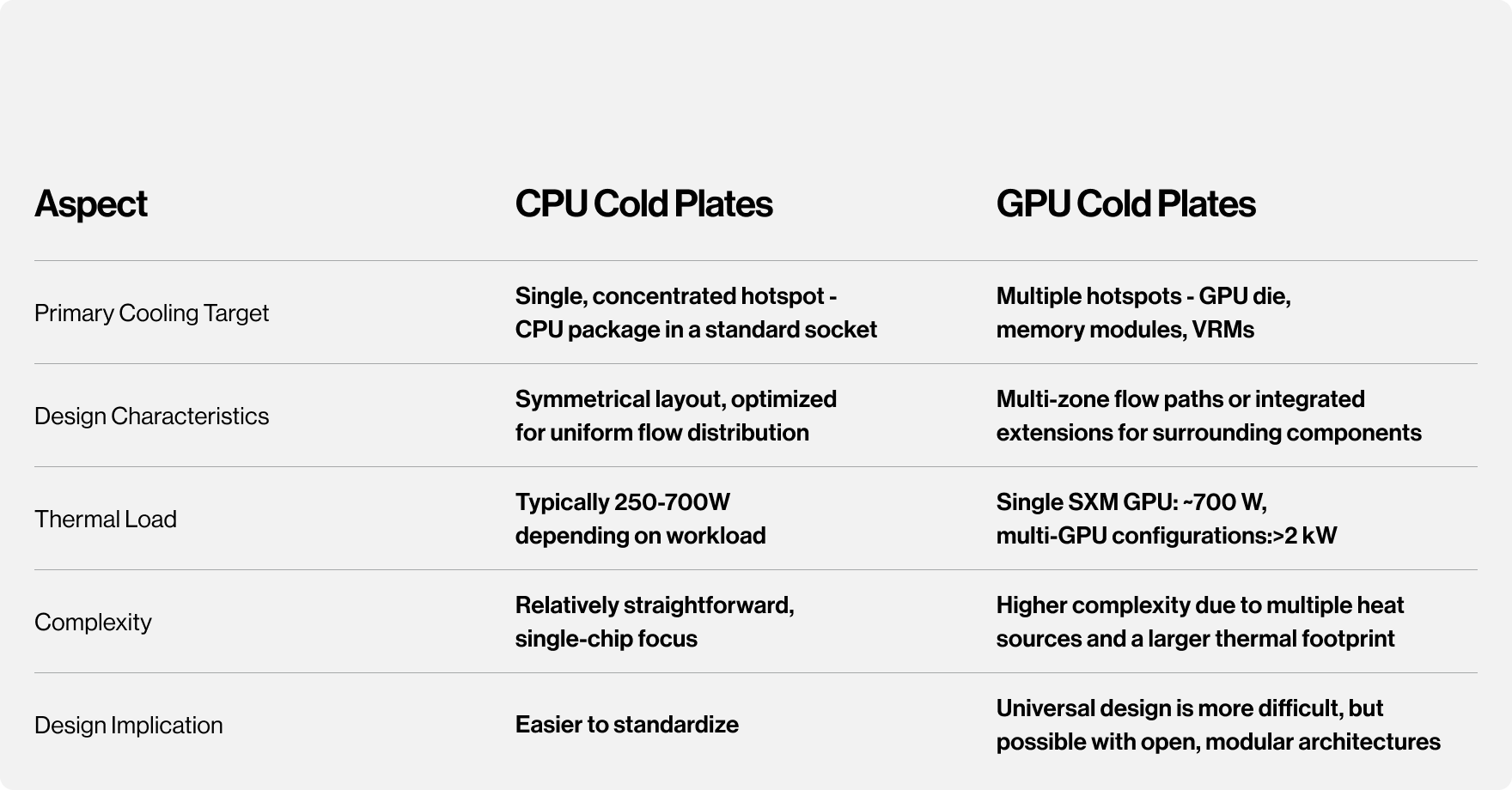
Table 1. CPU Cold Plates vs. GPU Cold Plates
These differences mean a universal cold plate design is not trivial – yet with open, modular architectures, it is increasingly possible to serve both worlds with a single adaptable system.
Why Copper Still Rules
Despite advances in materials science, copper remains the undisputed choice for most high-end cold plates. With thermal conductivity around 400 W/m·K – roughly double that of aluminium – it moves heat quickly and evenly away from the chip. It’s also easy to machine with the fine tolerances needed for microchannel designs.
The drawback? Copper can oxidize in the presence of water. The answer is nickel plating, which not only protects the copper but also prevents contamination in the closed loop. In comparison, aluminium is cheaper and lighter but has lower conductivity and is more prone to corrosion in liquid loops. Stainless steel offers mechanical strength and corrosion resistance, but its thermal conductivity is significantly lower, making it suitable only for structural elements rather than direct heat transfer. Advanced coatings such as electroless nickel-phosphorus (Ni-P) or even ceramic-based layers are sometimes used to enhance durability and reduce fouling, though they come with higher cost and added complexity.
Another important challenge is galvanic corrosion, which can occur when different metals (e.g., copper, aluminium, stainless steel) are combined within the same cooling circuit. For this reason, material selection must always be considered at the level of the entire TCS/FWS loop, not just the cold plate itself, to ensure long-term reliability and chemical stability.
This combination of conductivity and durability is why you’ll find copper-nickel cold plates at the heart of the most demanding AI installations.
The Shift to Direct-to-Chip Cooling
For decades, data centers relied on massive airflow management schemes – raised floors, hot aisle containment, powerful CRAC units – to move heat from silicon to the outside world. But as power densities climb, the cost and complexity of these systems increase exponentially. Modern data centers face a significant engineering challenge: how to effectively remove heat from systems that generate hundreds of kilowatts per rack.
Direct-to-chip cooling bypasses these limitations. By bringing the coolant directly to the component that needs it most, it minimizes intermediate heat transfer steps, which are the real bottlenecks in traditional cooling. Industry data shows that DLC can cut per-server cooling power consumption by 5–15%, with even greater gains – up to 50% – in ultra-dense AI racks.
This efficiency also opens the door to heat reuse. With warm-water operation (ASHRAE W3/W4), the waste heat from AI clusters can be repurposed for district heating, industrial processes, or even absorption cooling.
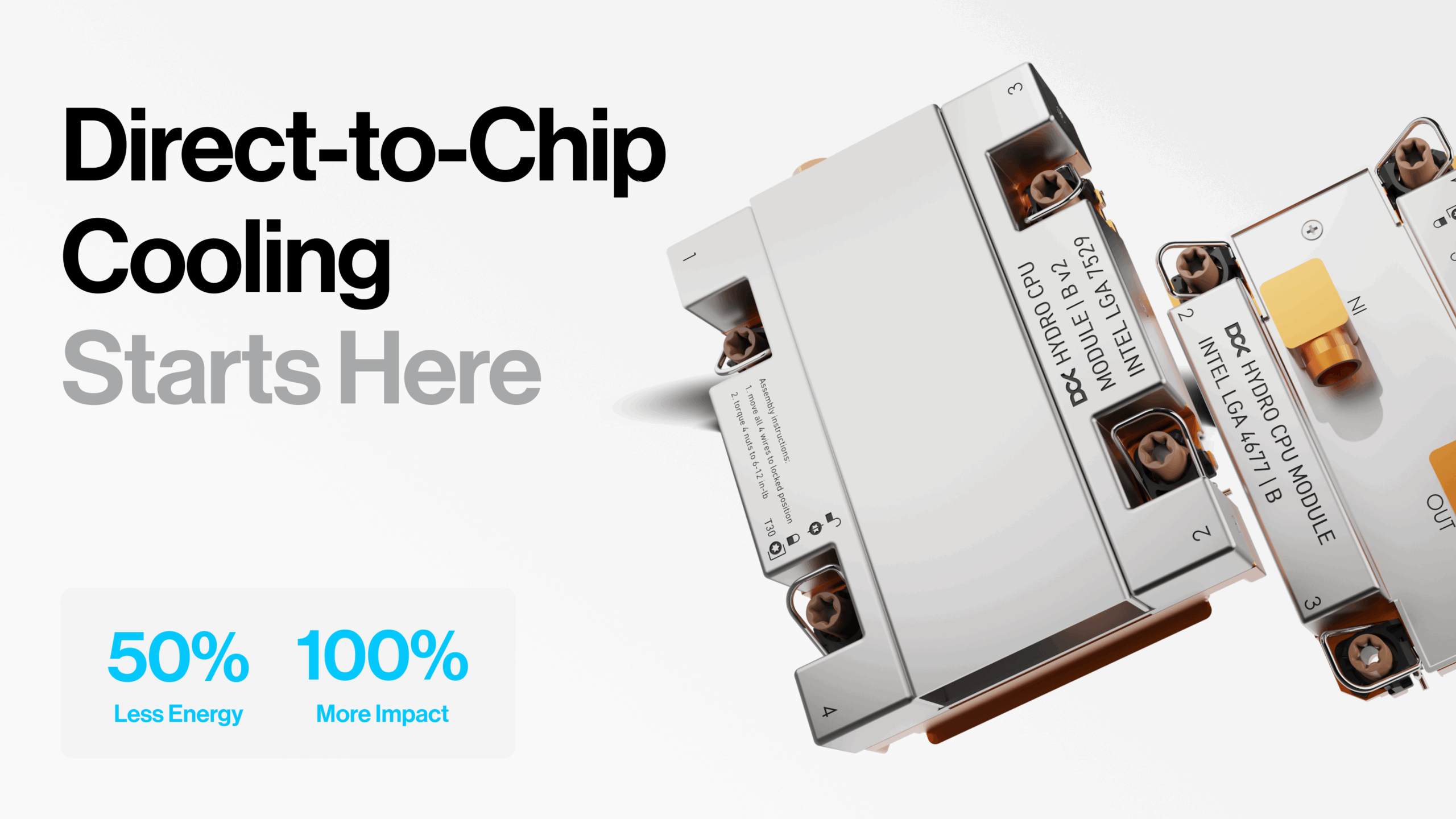
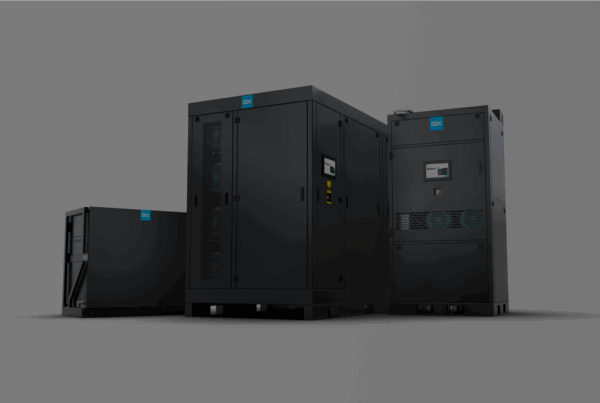
Figure 2. The Shift to Direct-to-Chip Cooling
What was once viewed as an “experimental” method limited to research labs or niche HPC projects has now become a proven and commercially viable solution. Today, hyperscalers, high-performance computing centers, and enterprise operators are using Direct-to-Chip Cooling to support modern workloads, boost energy efficiency, and meet the thermal demands of next-generation infrastructure.
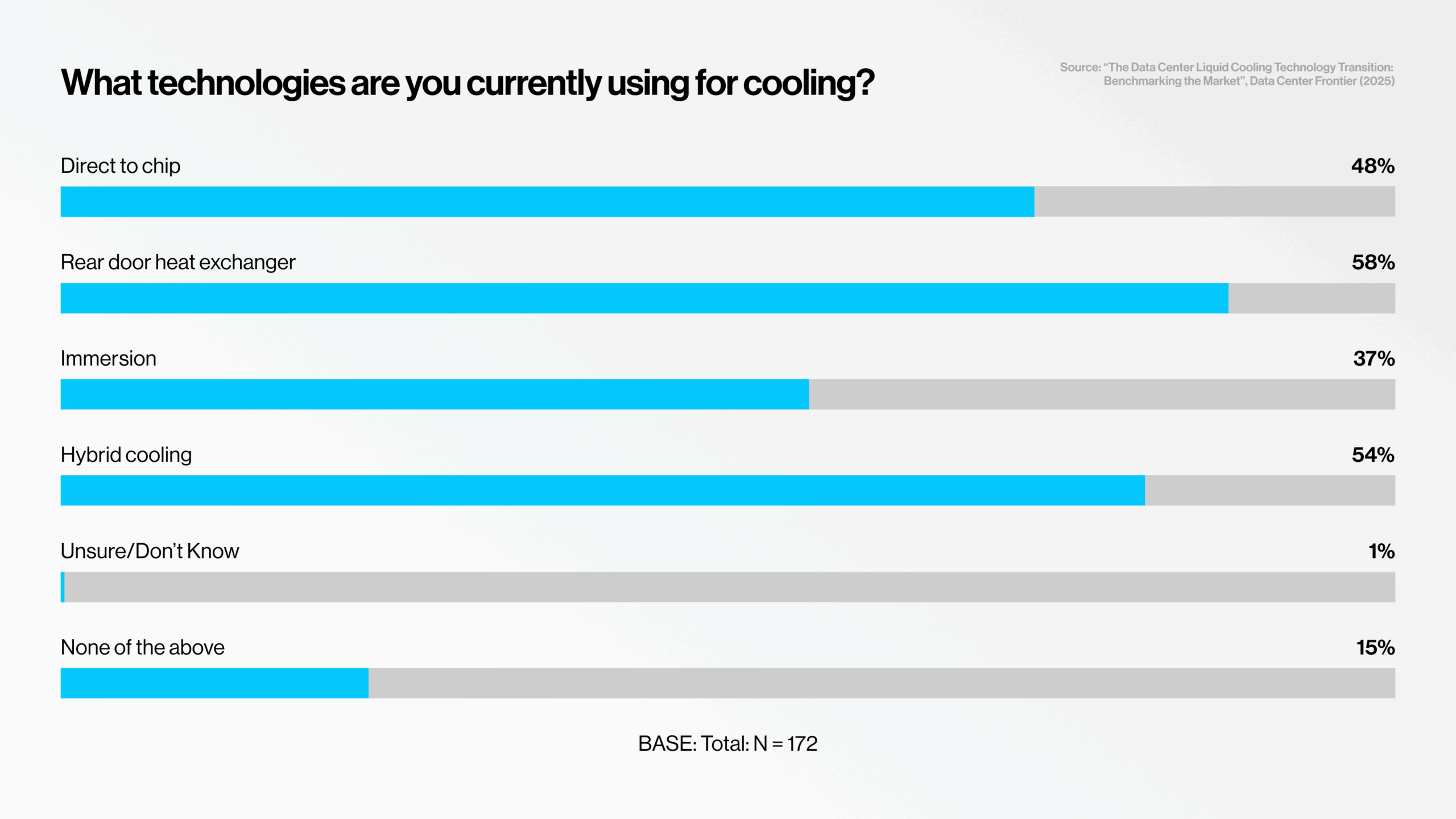
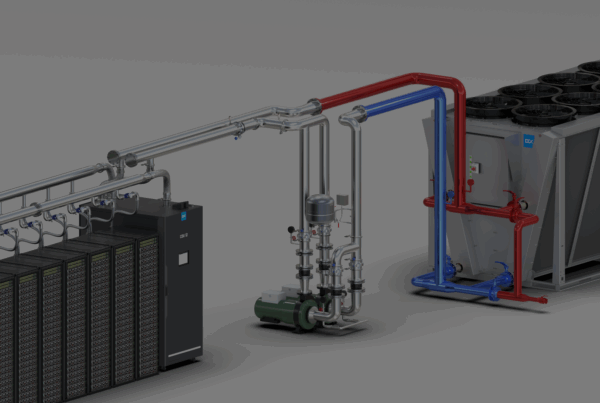
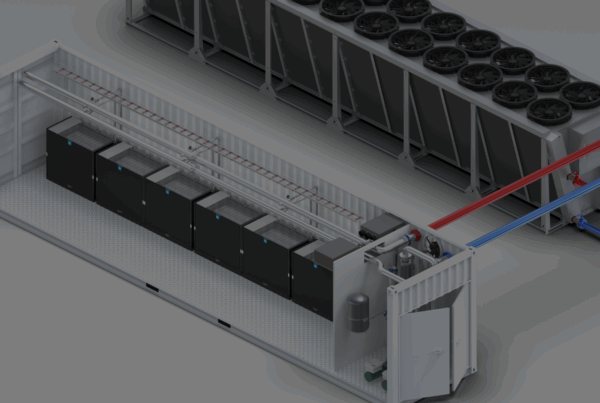
Figure 3. The Direct-to-Chip Cooling Technology Transition
Why are more data centers switching to Direct-to-Chip Cooling?
- Targets the hottest components – precisely cools CPUs, GPUs, and accelerators using dielectric or water-based fluids delivered directly via cold plates.
- Removes over 90% of generated heat without relying on energy-hungry fans or large external chillers, enabling industry-leading PUE.
- Optimized for AI and HPC – built to handle machine learning, big data, and other compute-intensive environments at high rack densities.
- High ambient tolerance – operates reliably even at ambient temperatures up to 45 °C.
- Officially supported by Nvidia – Blackwell platforms (GB100, GB200, GB300) are certified for Direct-to-Chip cooling, confirming it as a mainstream, energy-efficient, and future-proof solution for AI racks.
Open Architecture – A Break from Proprietary Loops
Historically, cold plates were tied to specific OEM platforms, each with its own proprietary loop layout and mounting scheme. This approach locks operators into vendor-specific ecosystems, limits retrofitting options, and raises costs.
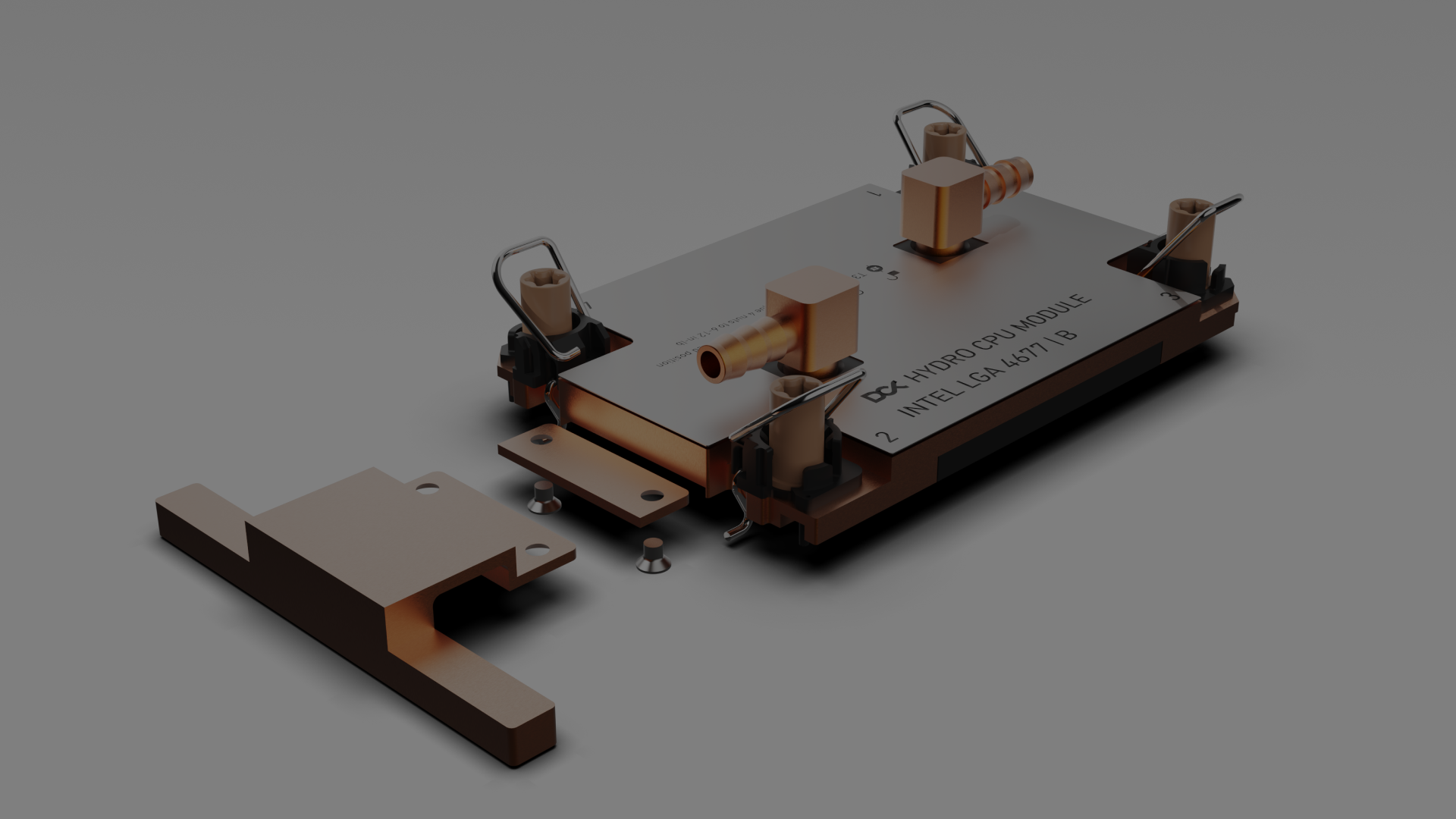
Open-architecture cold plates, like those in the DCX HYDRO series, break this pattern. Designed for universal mounting and with push-to-lock quick-disconnect couplings, they can be installed without chassis modifications or warranty issues. Modular heat transfer “bridges” can extend coverage to VRMs, memory modules, and other nearby hotspots – critical for GPUs and AI accelerators where every watt counts. A single DCX HYDRO cold plate is capable of dissipating between 400 W and up to 2000 W of thermal power, making it suitable for cooling a wide range of devices.
The result is a system that is vendor-agnostic, reusable across hardware generations, and easier to integrate into diverse environments.
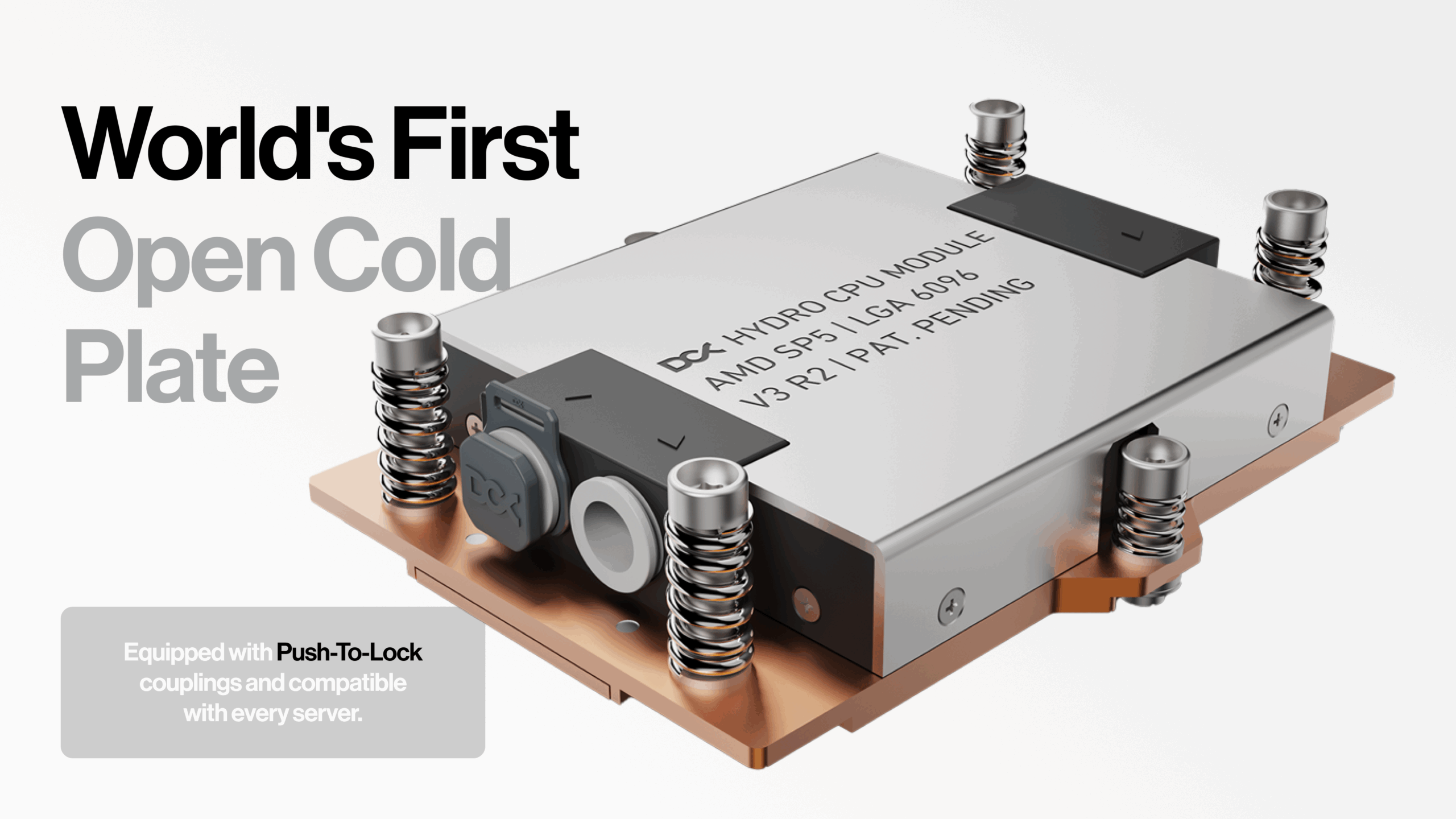
Figure 4. World’s First Open Cold Plate
Open architecture advantages:
- The use of open CPU and GPU cold plates, rather than custom-made proprietary loops for individual servers, enables users to configure direct chip cooling server loops.
- The open architecture makes both manifolds and cold plates affordable and compatible with all server platforms.
- The system is excellent for retrofitting and does not void server warranties.
Designing for the AI Era
The demands of AI workloads are not static – they are growing, and fast. Next-generation GPUs are already expected to push beyond 800 W each, and CPU packages continue to scale upwards. In this context, cold plate performance becomes a strategic decision, not a line item.
An effective AI-ready cold plate must:
- Sustain kilowatt-level heat loads without excessive pressure drop.
- Operate in warm-water loops to enable heat reuse.
- Adapt to evolving hardware without costly redesigns.
- Maintain low maintenance overhead and high service life.
A well-designed cold plate determines how much heat can be removed, how quickly it can be extracted, and how easily the system can be scaled or maintained. Engineers who consider these factors early in the design phase will be better positioned to build facilities that not only meet today’s needs but can scale gracefully into the next decade.
Summary of Benefits – Why Cold Plates Matter
The cold plate may never get the spotlight that a cutting-edge GPU does, but in the quiet, unglamorous work of keeping silicon cool, it is every bit as critical. In AI data centers, it is the difference between theoretical performance and real-world throughput, between a facility that runs at the edge and one that runs into the red.
And this role is only set to grow. As the demand for processing power accelerates, cold plates are becoming a cornerstone of modern thermal management strategies. Their ability to manage kilowatt-level heat loads, enable sustainable heat reuse, and scale with evolving architectures makes them indispensable for data centers adopting direct liquid cooling. Whether optimizing existing infrastructure or planning next-generation deployments, cold plates provide the thermal performance, energy efficiency, and reliability needed to keep pace with high-performance computing and AI. Their advantages speak for themselves.
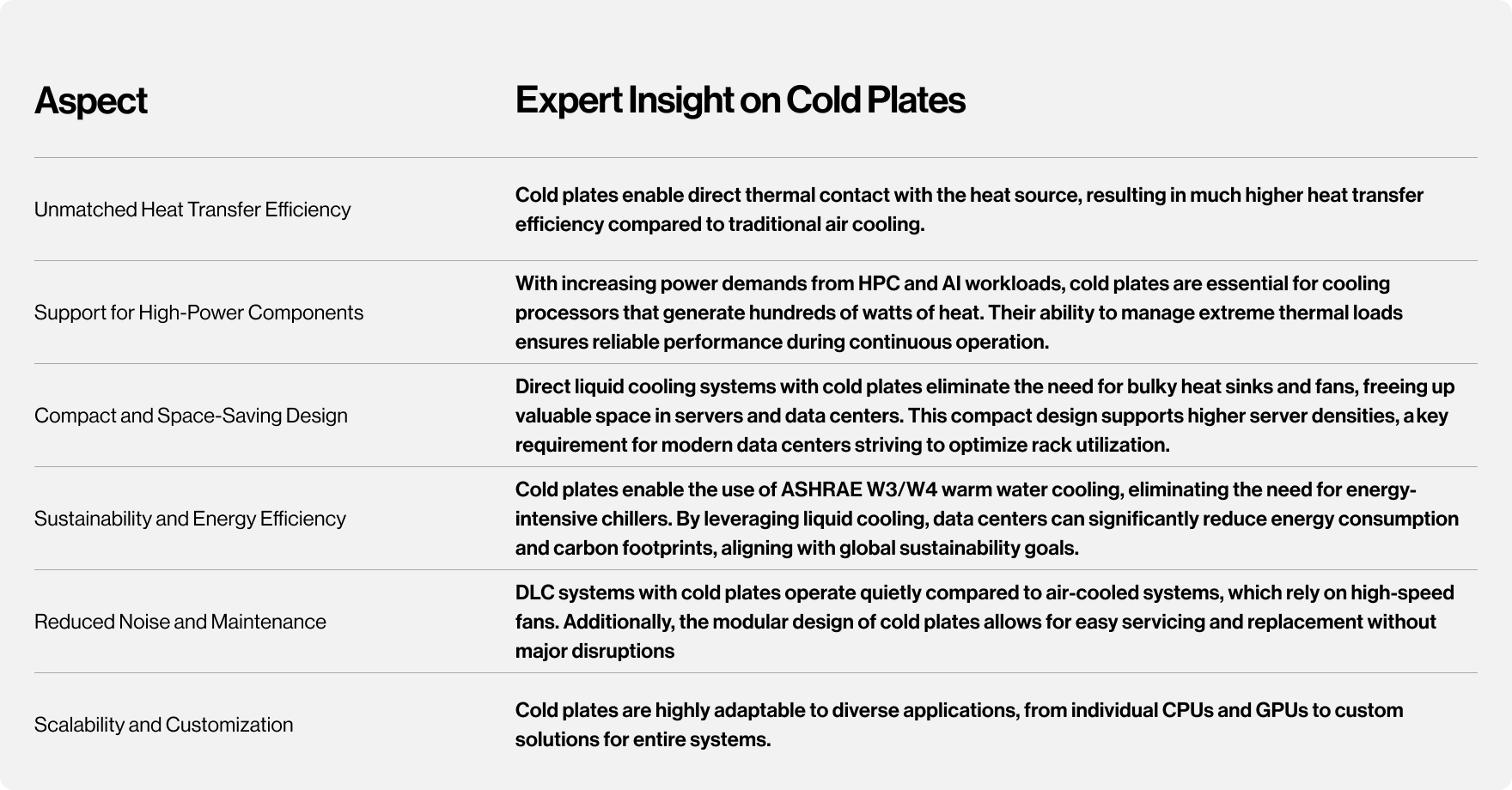
Table 2. Key Advantages of Cold Plates in Direct Liquid Cooling
Cold plates have quietly transformed from a niche technology into a cornerstone of modern data center design. By bringing liquid cooling directly to the hottest components, they enable reliable performance under unprecedented thermal loads, reduce energy consumption, and open the door to sustainable heat reuse. As AI and HPC workloads continue to grow, cold plates will remain at the center of this transformation, ensuring that data centers can scale efficiently, operate sustainably, and meet the ever-rising demands of next-generation computing.
In this context, the contribution of DCX is noteworthy. By developing open-architecture cold plates for CPUs and GPUs – engineered to handle thermal loads from 400 W up to 2,000 W – DCX provides solutions that are both vendor-agnostic and compatible across hardware generations. The use of copper-nickel designs with modular extensions and push-to-lock connections reflects a focus on thermal efficiency, durability, and integration flexibility. Such approaches exemplify how engineering innovation is helping to define the practical standards for direct-to-chip cooling in the AI era.